The Office Is Too Loud to Think In
Modern office environments, particularly open-plan and hot-desking setups, inadvertently expose workers to a constant stream of low-level auditory and visual disturbances that significantly degrade concentrated work.
Work Survival Club · 1 July 2026 · 3 min · Original reporting
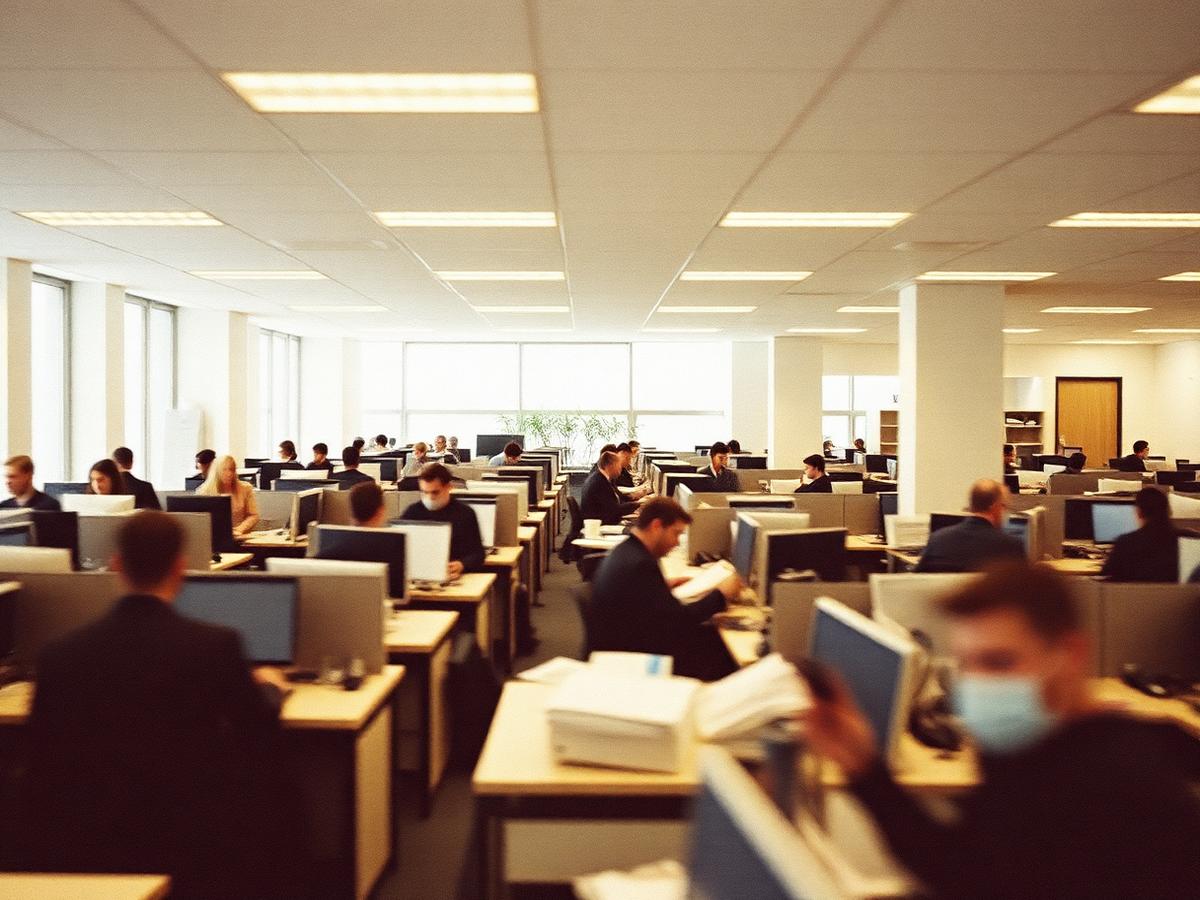
The contemporary office often presents itself as a hub of collaboration and efficiency. However, beneath the veneer of modern design and flexible working arrangements, a pervasive issue quietly undermines individual concentration: incidental noise. This is not the cacophony of a construction site, nor the loud outburst of a frustrated colleague, but rather the steady, low-level hum of everyday office life.
From distant conversations to the clatter of keyboards and the gentle ringing of unattended phones, these seemingly minor auditory and visual intrusions create a cumulative burden. While each individual event might be dismissed as insignificant, their aggregate effect can substantially fragment attention, demanding constant cognitive effort to filter or ignore them. This ceaseless battle against disruption impacts not just immediate task performance but also long-term cognitive health.
The Cognitive Taxation of Ambient Office Sounds
Research indicates that even irrelevant background speech can impede cognitive performance, particularly for tasks requiring working memory and attention. A 2008 study published in the Journal of Applied Psychology found that exposure to irrelevant speech significantly impaired recall and basic arithmetic performance compared to quiet conditions. The brain dedicates resources to processing auditory information, whether relevant or not, meaning that a constant stream of office chatter diverts capacity from the primary task.
This phenomenon, known as the 'irrelevant sound effect,' highlights how our auditory system struggles to filter out speech, even when we consciously try to ignore it. The cognitive effort expended in this filtering process contributes to mental fatigue without any direct productive output. In open-plan settings, where the opportunity for incidental speech is significantly higher than in cellular offices, this effect is amplified.
The brain dedicates resources to processing auditory information, whether relevant or not, meaning that a constant stream of office chatter diverts capacity from the primary task.
Hot-Desking: An Amplifying Factor
The rise of hot-desking, often lauded for its flexibility and efficient use of space, inadvertently exacerbates the issue of incidental noise. Without a dedicated personal workspace, individuals may feel a diminished sense of ownership or control over their immediate environment. This can lead to less consideration for noise levels, as transient occupants might be less invested in maintaining a quiet atmosphere for their temporary neighbours.
- Lack of psychological ownership: Workers may feel less responsibility for maintaining the quiet of a shared, non-permanent desk area.
- Unpredictability: The constant rotation of neighbours introduces an unpredictable element of new conversational patterns and movement, making it harder to adapt or anticipate distractions.
- Increased movement: Hot-desking often correlates with more internal office movement as individuals seek out available spots or resources, adding to visual and auditory clutter.
Beyond Auditory: The Visual Element
While sound often takes precedence in discussions of office distraction, visual intrusions also play a role. A colleague passing by, gestures in a peripheral vision, or the movement of a screen can all draw the eye and momentarily break concentration, demanding what psychologists refer to as an 'orienting response.' In an open-plan office, with its inherent transparency and movement, these visual cues are more frequent and harder to ignore completely.
Navigating the Noisy Workspace
Mitigating the effects of incidental noise requires a multi-faceted approach, acknowledging both individual coping strategies and organisational design considerations. While organisations could invest in acoustic panels, designated quiet zones, or 'focus pods', individual workers may need to adapt. Strategies include utilising noise-masking technologies, such as white noise generators or specific types of instrumental music, which can provide a more consistent sound environment, making it easier to filter out unpredictable speech. Structured 'deep work' periods, communicated to colleagues, can also help establish expectations around concentration.
Sources
- Irrelevant speech effect in working memory: a meta-analysis (opens in a new tab) — A meta-analysis reviewing the impact of irrelevant speech on cognitive tasks.
- Impact of incidental sound on mental performance in the office environment (opens in a new tab) — Examines the effects of various office sounds on cognitive performance.
- Open-plan offices: A systematic review of impacts on staff (opens in a new tab) — Review of literature on open-plan offices, including effects on concentration and privacy.
General information about work and health, not medical advice. See our medical disclaimer.