The Wrong Way to Stand at a Desk
While standing desks offer a popular alternative to prolonged sitting, their benefits can be undermined by poor posture and incorrect usage, potentially introducing new physical stresses rather than alleviating existing ones.
Work Survival Club · 10 August 2026 · 3 min · Original reporting
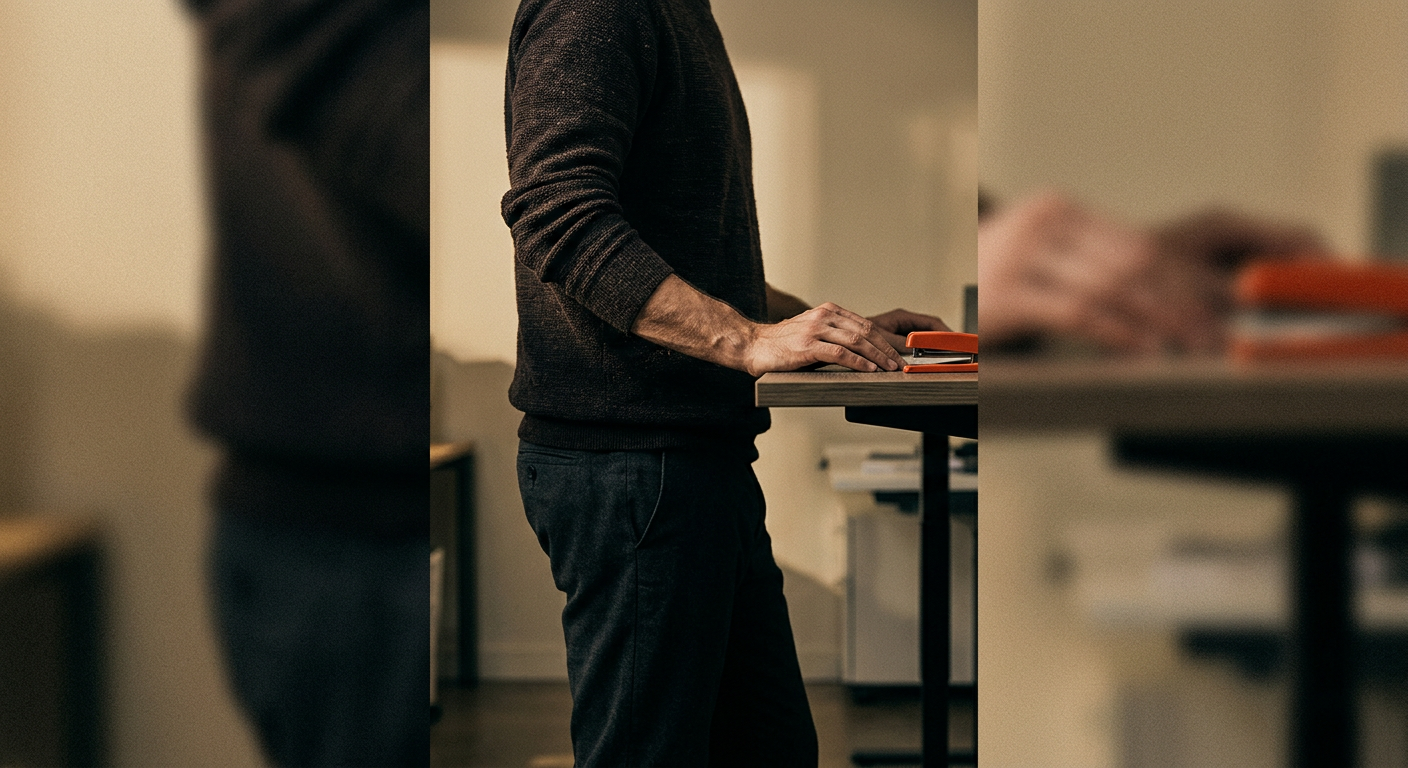
For many years, the advice for desk workers revolved around sitting correctly. Then, as research mounted on the detrimental effects of prolonged sedentary behaviour, the standing desk emerged as a celebrated antidote. The promise was clear: stand more, sit less, and enjoy improved health outcomes, from better circulation to reduced back pain. However, merely adopting a standing desk does not automatically resolve the physical challenges of office work.
The transition to standing can introduce its own set of biomechanical hurdles. Without an understanding of proper standing posture and the necessary accessories, workers may inadvertently exchange one set of problems for another, transforming a potentially beneficial tool into a new source of strain and discomfort. The human body is designed for movement, not static positions, whether seated or standing.
The Static Strain of Standing
While standing burns slightly more calories than sitting and may improve aspects of metabolic health, simply standing still for extended periods can be as problematic as prolonged sitting. Static standing can lead to discomfort in the lower back, legs, and feet. Research indicates that prolonged standing, without movement, can increase the risk of musculoskeletal pain and fatigue. A study published in Applied Ergonomics highlighted that standing for more than two hours continuously can significantly increase discomfort in the lower limbs and back, particularly if not combined with movement or appropriate breaks.
A standing desk without a movement strategy is often just a different kind of static discomfort.
The body distributes weight differently when standing. Poor posture, such as leaning on one leg, hunching over the keyboard, or craning the neck, can place undue stress on joints and muscles. This can manifest as new aches or exacerbate existing issues, particularly in the cervical and lumbar spine.
- Lower back pain: Sustained standing can flatten the natural curve of the lumbar spine if core muscles are not engaged, or if the desk height encourages leaning.
- Foot and leg fatigue: The plantar fascia and calf muscles bear the brunt of continuous standing, potentially leading to plantar fasciitis or venous insufficiency over time.
- Neck and shoulder tension: If monitors are not at eye level or the keyboard is too far away, neck extension or shoulder shrugging can become habitual, causing strain.
- Reduced blood flow: While standing can improve overall circulation compared to sitting, static standing can still reduce blood flow to the lower extremities and lead to pooling in the legs.
Adjusting for Better Standing
To mitigate the risks associated with static standing, several adjustments and practices can be implemented. The goal is not just to stand, but to stand dynamically and correctly, integrating movement throughout the workday.
- 1Desk height adjustment: The desk should be set so that your elbows form a 90-degree angle when your forearms are parallel to the floor and your hands are on the keyboard.
- 2Monitor positioning: The top of your monitor should be at eye level, approximately an arm's length away, to prevent neck strain.
- 3Anti-fatigue mat: A good quality anti-fatigue mat can significantly reduce pressure on your feet and legs, encouraging subtle movements that improve circulation.
- 4Foot rest or stool: Periodically propping one foot on a small footrest or stool can help shift weight and alleviate pressure on the lower back.
- 5Regular movement: Integrate micro-breaks. Shift your weight, stretch, or walk for a minute or two every 20-30 minutes. This "movement snacking" is crucial for spinal health and circulation.
The Sit-Stand-Move Cycle
The most effective approach to a standing desk is not to stand all day, but to alternate between sitting and standing, interspersed with regular movement. This dynamic approach aligns with the body's natural need for varied postures and activity. Guidelines from the UK's Health and Safety Executive suggest varying posture regularly and taking short breaks to move away from the workstation.
Standing desks are a tool, not a panacea. Their effectiveness hinges on how they are used. By focusing on proper setup, incorporating accessories, and, critically, prioritising movement and varied postures, the potential benefits can be realised without inadvertently creating new sources of physical strain.
Sources
- The effect of prolonged standing on musculoskeletal symptoms and fatigue: a review of the literature (opens in a new tab) — A review exploring the impact of prolonged standing.
- Workstation design and ergonomics: Guidance for employers (opens in a new tab) — Health and Safety Executive guidance on workstation setup, including advice on varying posture.
- The Ergonomics of Sit-Stand Workstations (opens in a new tab) — Examines the ergonomic considerations and research surrounding sit-stand desks.
General information about work and health, not medical advice. See our medical disclaimer.