A Standing Desk Is Only as Good as Its Programming
Electric standing desks offer health benefits over prolonged sitting, but their efficacy depends on consistent, structured usage, which often requires thoughtful programming beyond simple height adjustments.
Work Survival Club · 7 August 2026 · 3 min · Original reporting
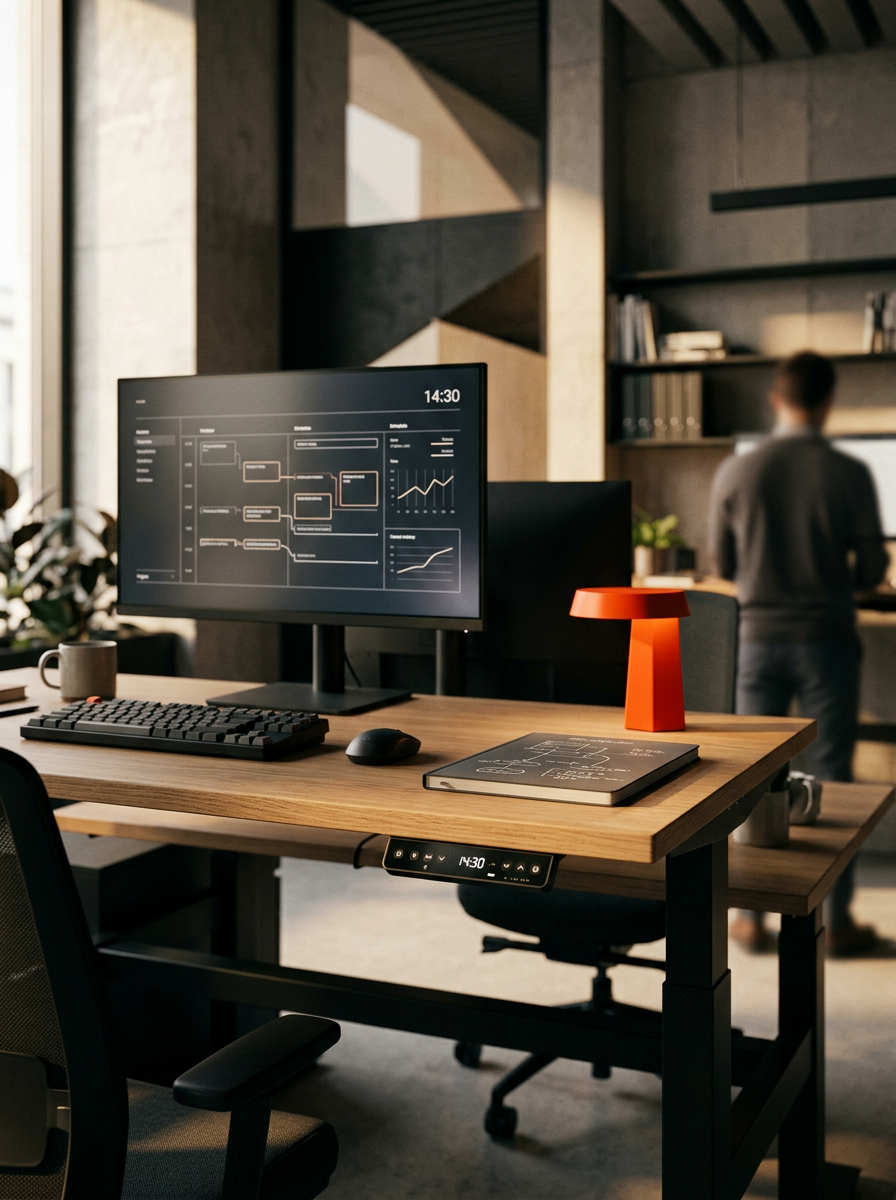
The electric standing desk has become a ubiquitous symbol of modern office ergonomics. For many, it represents a tangible effort to counteract the well-documented health consequences of prolonged sitting, from musculoskeletal discomfort to increased risks of chronic disease. However, simply owning such a desk does not automatically translate into improved well-being.
The true value of a standing desk lies not just in its ability to change height, but in how it is used. Consistent, intentional shifts between sitting and standing postures are crucial for realising the intended health benefits. This often requires more than just manual adjustments throughout the day; it demands a degree of programming and habit formation that many users overlook.
The Rationale for Standing Desks
Research consistently points to the risks associated with sedentary behaviour. A systematic review published in the Annals of Internal Medicine highlighted a dose-response relationship between sedentary time and adverse health outcomes, including all-cause mortality, cardiovascular disease, and type 2 diabetes. While prolonged standing also carries its own risks, such as increased load on the cardiovascular system and potential for lower limb discomfort, the key is movement and variation.
A standing desk is not a magic bullet; it is a tool. Its effectiveness is directly proportional to the deliberate effort put into its use.
- Reduced Sedentary Time: The primary benefit is breaking up long periods of sitting.
- Improved Posture: When set correctly, standing can encourage better spinal alignment.
- Increased Energy Expenditure: Standing burns marginally more calories than sitting, contributing to overall metabolic health.
- Enhanced Focus: Some users report improved concentration and reduced afternoon slumps.
Beyond Manual Adjustment: Programmed Presets
Many modern electric standing desks come with programmable height presets. These are not merely conveniences; they are essential for establishing a consistent routine. Without them, the friction of manually adjusting the desk height several times a day can lead to underutilisation. A common pattern is to set the desk to stand, use it for a while, and then revert to sitting for the remainder of the day because it feels like too much effort to re-adjust.
Effective programming involves more than just 'sit' and 'stand' settings. Consider setting multiple standing heights for different tasks, or even a 'perch' height that allows for a semi-seated posture. The goal is to make the transition seamless and effortless, reducing barriers to regular movement.
Integrating Reminders and Routines
Even with presets, habit formation requires a conscious effort. Several approaches can help integrate standing into the workday:
- 1Scheduled Alerts: Use desktop apps (e.g., 'Stand Up! The Work Break Timer' for macOS or 'Stand Reminder' for Windows) or simple phone alarms to prompt changes in posture every 30-60 minutes.
- 2Task-Based Transitions: Link posture changes to specific work activities. For instance, stand for all phone calls, during team meetings, or while reviewing documents.
- 3Gradual Introduction: Start with shorter periods of standing and gradually increase duration as comfort allows. Aim for a 1:1 or 1:2 sit-to-stand ratio over time.
For those seeking to maximise their standing desk investment, selecting a model with robust, easily programmable memory presets is advisable. Some desks integrate with apps that can track usage and suggest posture changes. This digital layer can provide the external prompt often needed to overcome inertia.
Practical Considerations for Your Desk
When evaluating standing desks, prioritise models with at least three programmable height presets and a smooth, quiet motor. Consider the stability of the desk at its highest setting, particularly if you use multiple monitors or heavy equipment. Additionally, ensure your cable management solutions can accommodate the vertical movement without snagging or disconnection.
Affiliate disclosure: This publication may earn a commission from purchases made through links on this page. We only recommend products we believe offer genuine value based on our research and editorial standards.
Sources
- Sedentary Time and Its Association With Risk for Disease Incidence, Mortality, and Hospitalization in Adults: A Systematic Review and Meta-analysis (opens in a new tab) — Comprehensive review on sedentary behaviour's health impacts.
- Occupational Sitting and Standing: Physiological, Psychosocial and Performance Outcomes – A Systematic Review (opens in a new tab) — Examines a range of outcomes related to sitting and standing at work.
General information about work and health, not medical advice. See our medical disclaimer.