A Good Power Strip Does More Than Supply Power
For many, the power strip is an unremarkable utility item, yet a well-chosen one can mitigate desk clutter, protect equipment, and even influence energy consumption at the workstation.
Work Survival Club · 4 October 2026 · 3 min · Original reporting
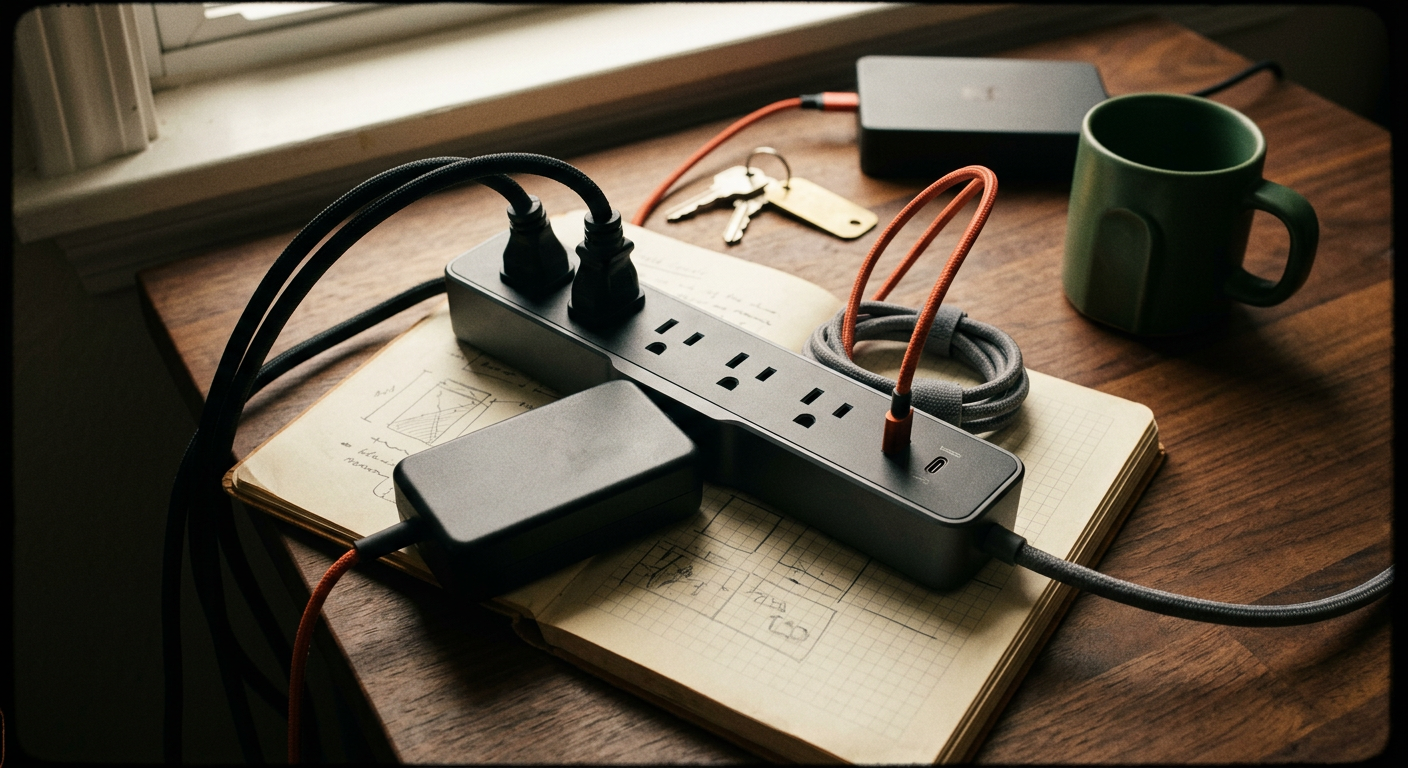
The power strip, or extension lead as it is often called in the UK, is a ubiquitous piece of office equipment. It lies on the floor, often obscured by cables and dust, its primary function to expand the limited wall sockets into multiple power points for the various devices that populate a modern desk. Despite its commonality, this piece of hardware is frequently purchased with minimal consideration, often based solely on the number of available sockets and the lowest price point.
However, treating the power strip as a mere commodity overlooks its potential role in enhancing a workspace. It is not just a distributor of electricity; it can be a central component in an organised, safe, and efficient desk setup. Choosing wisely can prevent common frustrations and even offer protective benefits that extend the life of your expensive work tools.
Beyond the Basic Extension
A basic power strip provides additional outlets, but offers little in terms of protection or advanced functionality. For a professional desk setup, moving beyond the cheapest option is a pragmatic decision. Surge protection is a primary consideration, shielding sensitive electronics from voltage spikes that can occur during electrical storms or grid fluctuations. While no surge protector offers absolute immunity, a unit with a joule rating of 1000 or higher provides a reasonable degree of defence for standard office equipment, as recommended by some electrical safety guidelines.
Furthermore, many contemporary power strips integrate features that address the specific demands of a desk environment. These can range from USB charging ports, eliminating the need for bulky adapters, to individually switched outlets, allowing for selective power control of peripherals without unplugging them. Such features, while seemingly minor, contribute to a more streamlined and manageable workspace.
A power strip with integrated surge protection and intelligent design is not an indulgence, but a foundational component for a resilient and tidy workstation.
Key Considerations for Selection
- Surge Protection Rating: Look for a high joule rating (1000+ joules is a good starting point) to protect against power surges. This is particularly important for computers, monitors, and other expensive electronics. The Institution of Engineering and Technology provides guidance on surge protective devices.
- Number and Spacing of Outlets: Ensure there are enough outlets for all your devices, including future additions. Consider 'transformer-friendly' spacing, where outlets are sufficiently far apart to accommodate bulky power adapters without blocking adjacent sockets.
- Switched Outlets: Individual switches per outlet allow you to power down specific peripherals (e.g., external hard drives, lamps) when not in use, reducing 'vampire' power drain without full system shutdown. Research from entities like the Energy Saving Trust consistently highlights the impact of standby power on energy consumption.
- USB Charging Ports: Integrated USB-A and USB-C ports can declutter your desk by removing the need for separate charging bricks for phones, tablets, and other accessories.
- Cable Length and Management: Choose a cable length that comfortably reaches your wall socket without excessive slack or tension. Some power strips offer cable management features or design elements that make routing tidier.
What to Look For: A Practical Stack
For those seeking to upgrade their workstation's power management, specific features can make a substantial difference. A power strip that includes a master switch, for instance, allows for the complete shutdown of all connected devices, simplifying the process of powering down your entire desk at the end of the day. This not only conserves energy but also establishes a clear boundary between work and personal time, by physically disconnecting the tools of labour.
Furthermore, consider models with a flat-profile wall plug if your wall socket is behind furniture, or a right-angle plug to prevent excessive cable bending. These small design choices can prevent wear on cables and make a significant difference to the overall tidiness and safety of the desk area. While a high-quality power strip may represent a slightly higher initial outlay, the benefits of protection, convenience, and improved desk aesthetics often outweigh the cost in the long term.
Remember, this information is for general guidance and not a substitute for professional electrical advice. Always adhere to local electrical safety standards and manufacturer instructions for any electrical appliance.
General information about work and health, not medical advice. See our medical disclaimer.