Things Your Back Would Buy If It Had a Wallet
A side-by-side comparison of the desk upgrades people actually ask us about, with the trade-offs left in.
Nell Okonjo · 15 July 2026 · 6 min · Original reporting
Disclosure:some links here are affiliate links. If you buy something, we may earn a commission. It never changes the price you pay, and it never buys a recommendation.
We get the same three questions: standing desk or converter, split keyboard or normal one, and whether a sleep tracker is a gadget or a tool. Here is the honest version of each, including the cases where the answer is "don't bother".
Sit-stand desk vs desktop converter
Why it matters. Changing posture through the day is the single most effective thing you can do about static desk load. Both options enable it.
Full sit-stand desk. More stable, better cable management, larger surface, no compromise on monitor height at either position. More expensive, harder to move, sometimes a delivery ordeal.
Desktop converter. A fraction of the price, works on the desk you already own, and reversible if you hate it. Wobblier at height, eats desk space, and the keyboard tray position is usually a compromise.
Verdict. If you are unsure whether you will use it, buy the converter and find out. If you already know you will, buy the desk and skip the intermediate purchase.
Split ergonomic keyboard vs standard
Why it matters. A standard keyboard forces your forearms inward and your wrists outward. Over a typing-heavy career that geometry is the complaint.
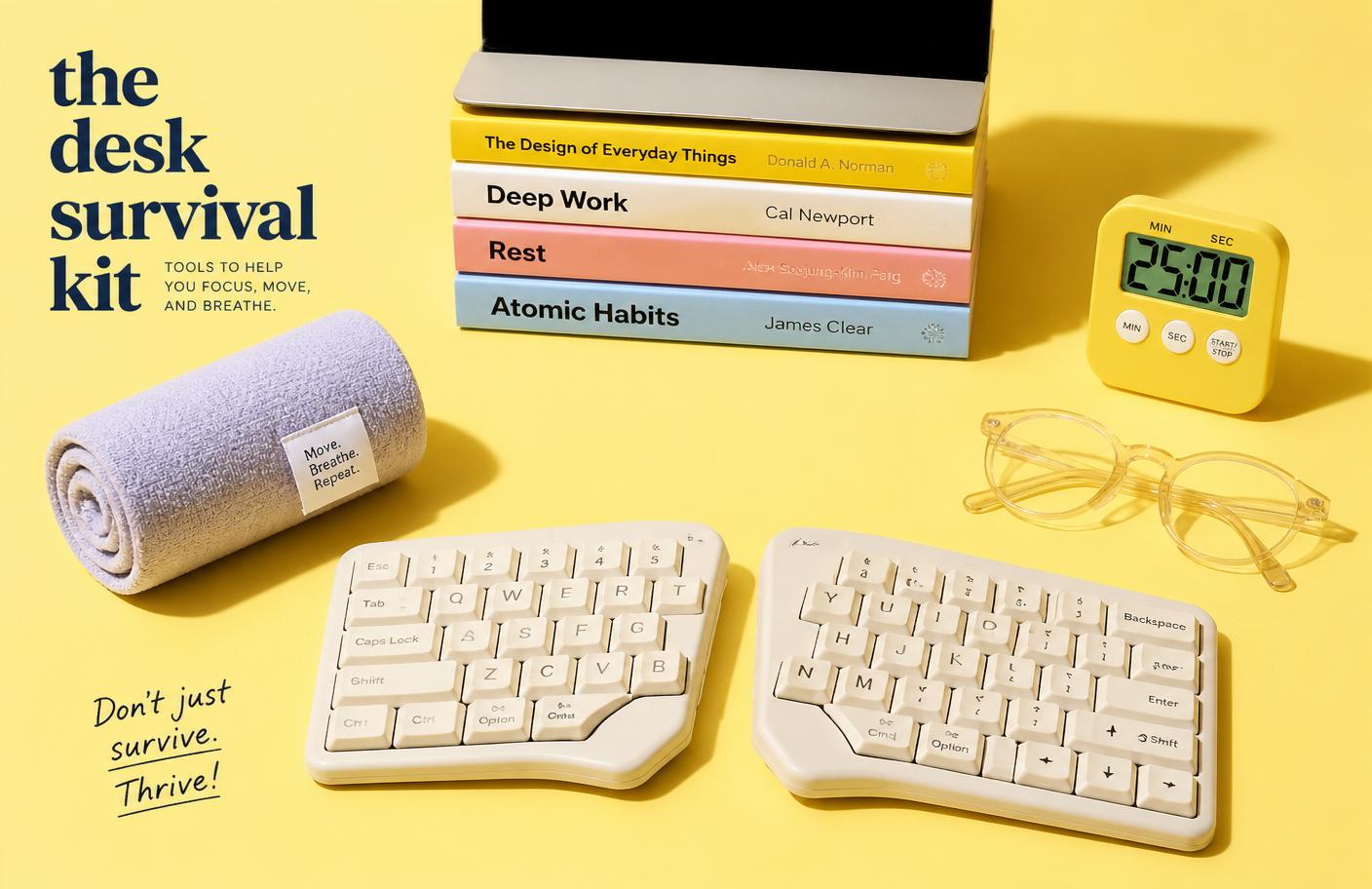
Split keyboard. Shoulders open, wrists straighter, and — if you type all day — noticeably less end-of-day forearm ache. Costs real money, takes one to two weeks to relearn, and makes hot-desking awkward.
Standard keyboard. Free, already on your desk, universally compatible. Also the reason your wrists are sending letters.
Verdict. Worth it for heavy typists with existing symptoms. Not worth it if you mostly attend meetings and write short messages.
Sleep and recovery tracker vs no tracker
Why it matters. Most people cannot accurately estimate their own sleep, and almost nobody connects it to their calendar without data.
Tracker. Ends the argument about whether late work sessions are costing you. Good for pattern-spotting over weeks. Recovery and readiness metrics are directionally useful, not diagnostic.
No tracker. Free, and if you already know the answer — you are up until 1am on a laptop — the data will only confirm it expensively.
Verdict. Buy it if you need evidence to change a behaviour or a schedule. Skip it if you already have the evidence and are ignoring it, or if quantifying your sleep is likely to make you more anxious about sleeping. That happens, and it is counterproductive.
None of these are treatments. If something hurts persistently, the correct first purchase is an appointment.
General information about work and health, not medical advice. See our medical disclaimer.