What a Footrest Actually Does
For desk workers, maintaining good posture is crucial, yet often overlooked elements like foot placement can undermine even the best ergonomic chairs, leading to discomfort and strain.
Work Survival Club · 31 July 2026 · 4 min · Original reporting
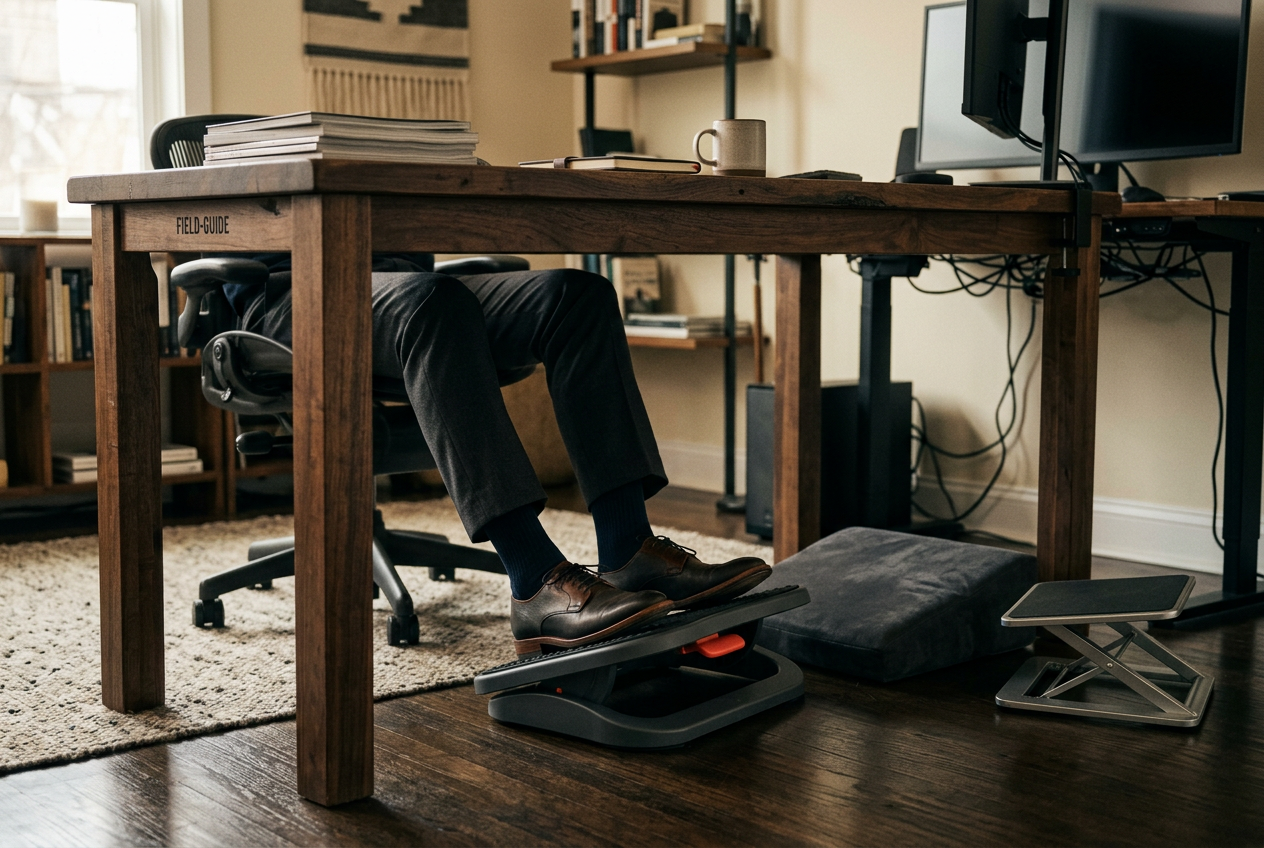
In the persistent quest for a comfortable and ergonomically sound workstation, the primary focus often falls on the chair. An expensive, feature-rich office chair is frequently heralded as the panacea for desk-related aches and pains, yet many users continue to report discomfort, particularly in the lower back and legs. This can be a perplexing experience, especially after investing substantially in what is marketed as a 'perfect' seating solution.
The reality is that even the most advanced ergonomic chairs cannot fully address postural alignment if fundamental elements of the setup are neglected. One frequently overlooked component is proper foot support. When feet do not rest firmly on the floor or an appropriate support, the body's entire alignment can be compromised, leading to a cascade of issues from altered spinal curvature to restricted circulation. This guide explores the utility of underdesk footrests, examining their ergonomic claims and considering whether they are a worthwhile addition to a desk worker's setup.
The Biomechanics of Foot Support
The concept of foot support might seem minor, but its impact on sitting posture is significant. When feet are unsupported or dangling, the pressure distribution through the thighs and hips changes. This can lead to increased stress on the lower spine and poor circulation in the legs. An underdesk footrest aims to mimic the sensation of having feet flat on the floor, even for individuals whose chairs are set too high or who have shorter statures. This elevation and support help maintain a neutral posture of the hips and knees, with the knees ideally at or slightly below hip level.
Research by Bridger and Von Baeyer (2000) indicates that appropriate foot support can reduce discomfort and improve postural stability, particularly for seated tasks. The benefits extend beyond immediate comfort, influencing long-term musculoskeletal health. A consistent, supported posture minimises static muscle loading, which is a common contributor to fatigue and pain in desk-bound roles.
The subtle elevation provided by a footrest can be the missing link in achieving sustained ergonomic comfort, often improving lower back and leg strain where a chair alone falls short.
Key Features to Consider
Not all footrests are created equal. When evaluating options, several features contribute to their effectiveness and user satisfaction:
- Adjustability: Look for variable height and tilt angles. The ability to customise the footrest to individual needs is crucial for achieving optimal ergonomic positioning. Fixed-height models are often less effective.
- Surface Type: Some footrests offer textured surfaces which can provide a gentle massage effect, potentially aiding circulation. Others are smooth. Material also matters; non-slip surfaces are important for safety and stability.
- Foot Movement: Certain models allow for slight rocking or tilting motions, encouraging dynamic sitting. This can help prevent static posture and promote blood flow, although some users prefer a fixed, stable surface.
- Durability and Materials: Given daily use, a robust construction from materials like high-impact plastic, wood, or metal is desirable. Cheap, flimsy options may not withstand regular pressure.
Evaluating Common Footrest Types
Footrests generally fall into a few categories, each with distinct advantages and drawbacks:
Fixed-height Ergonomic Footrests
These are typically simple platforms, sometimes with a slight angle. While affordable, their lack of adjustability means they are only suitable if their pre-set dimensions perfectly match your ergonomic needs. They offer basic support but limited customisation. For many, this type provides insufficient flexibility, leading to a suboptimal fit.
Adjustable Ergonomic Footrests
These are the most common and often recommended type. They allow for changes in height and tilt, accommodating a wider range of users and desk setups. Models that allow for independent adjustment of each foot platform offer even greater personalisation, beneficial for those with differing leg lengths or specific comfort requirements. Examples include models from Kensington or Fellowes, which often feature non-slip surfaces and robust construction, aligning with Hedge (2000) recommendations for adjustability.
Dynamic or Rocking Footrests
Designed to encourage movement, these footrests typically have a curved base or a mechanism that allows the user's feet to rock back and forth. This movement can stimulate circulation and reduce the static load on leg muscles. While beneficial for promoting active sitting, some users may find the constant motion distracting. They are a good choice for those who feel restless or experience leg fatigue during long periods of sitting.
Making a Judgement: Are They Worth It?
For many desk workers, particularly those whose feet do not comfortably rest flat on the floor even with their chair at the lowest setting, an underdesk footrest transitions from a 'nice-to-have' to an essential ergonomic tool. The cost-benefit analysis often leans heavily towards benefit when considering the potential for reduced discomfort, improved posture, and increased focus stemming from better physical support. While not a universal solution, a well-chosen, adjustable footrest can significantly enhance the ergonomic validity of a workstation.
Sources
- Ergonomic Guidelines for Computer Workstations (opens in a new tab) — OSHA eTool discussing workstation components, including footrests.
General information about work and health, not medical advice. See our medical disclaimer.