What Good Task Lighting Does
While ambient light illuminates a room, effective task lighting is designed to direct illumination precisely where it is needed for specific work, reducing visual fatigue and improving concentration.
Work Survival Club · 14 August 2026 · 3 min · Original reporting
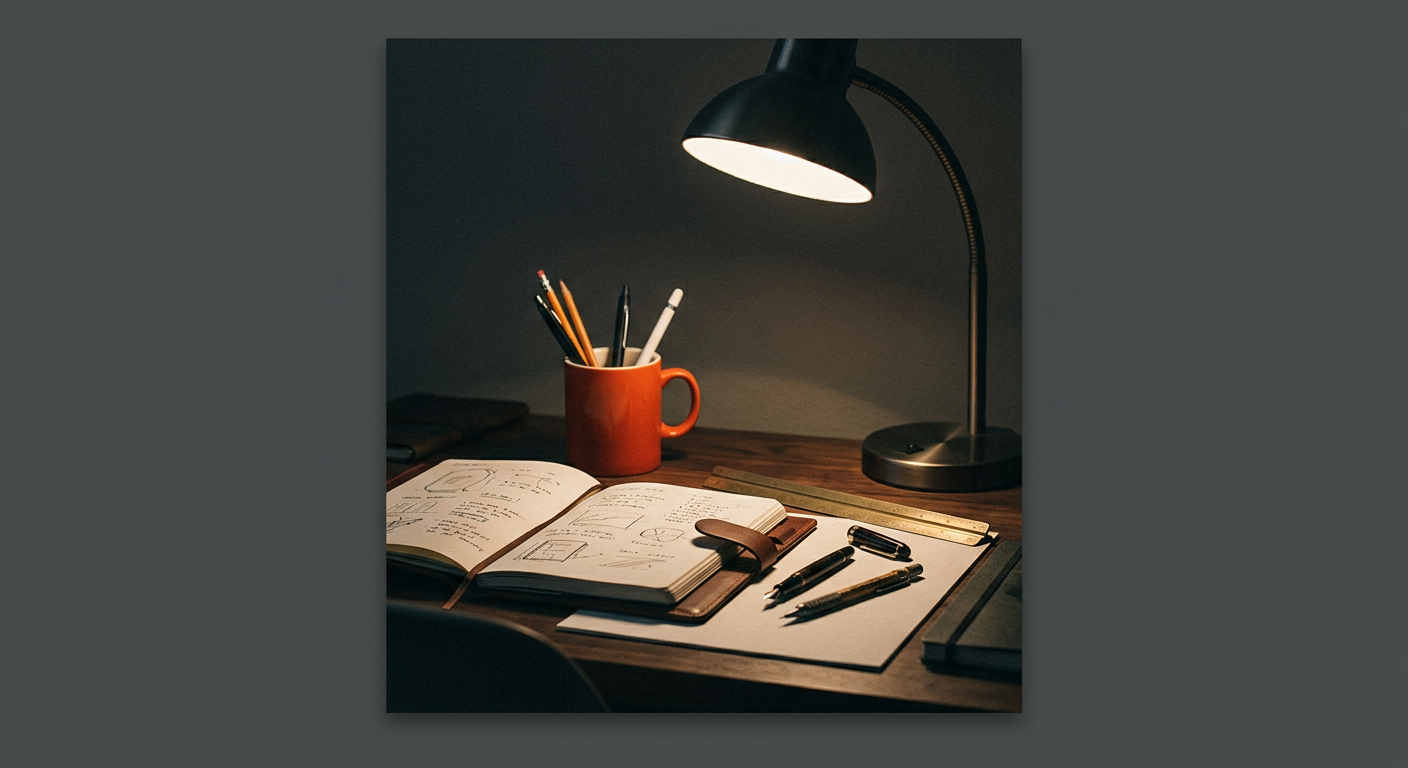
The overall illumination in a workspace is often sufficient for general movement, but rarely optimised for the focused visual demands of desk work. Many offices and home setups rely on ambient lighting alone, which casts a broad, often diffuse light across an area. This approach can leave workstations under-illuminated, forcing the eyes to work harder to distinguish details on screens or documents.
A lack of appropriate task lighting can lead to visual discomfort, headaches, and a general sense of fatigue after prolonged periods of concentration. These symptoms are not always immediately attributed to poor lighting, but they accumulate, contributing to the broader health costs of modern work. Considering dedicated task lighting goes beyond aesthetics; it is a practical consideration for ocular health and sustained productivity.
Beyond Brightness: Light Quality
Effective task lighting is not solely about increasing lumens. The quality of the light emitted is equally important. Two key aspects are colour temperature and flicker, both of which can impact visual comfort and cognitive function. Colour temperature, measured in Kelvin (K), describes the colour appearance of the light, ranging from warm (reddish-yellow) to cool (bluish-white).
Studies indicate that cooler white light (around 4000-5000K) can enhance alertness and cognitive performance for certain tasks, while warmer light may be more relaxing.
A 2012 study published in the Journal of Environmental Psychology found that colour temperature can influence mood and alertness, with cooler temperatures associated with increased arousal and attention in office settings. The ideal colour temperature for task lighting often falls in the 'neutral white' to 'cool white' range, typically between 3500K and 5000K, which is considered suitable for concentration without being overly harsh. Furthermore, detectable flicker in lighting can cause eye strain and headaches, though modern LED lights typically mitigate this issue effectively compared to older fluorescent bulbs.
Targeting the Task
The fundamental purpose of task lighting is to illuminate a specific area without causing glare or shadowing. A good task lamp should be adjustable, allowing the user to direct the light precisely onto their work surface, whether that is a document, a keyboard, or a specific part of a monitor. The aim is to create an appropriate contrast between the task area and the surrounding environment, reducing the need for the eyes to constantly adapt.
- Adjustability: Look for lamps with flexible necks, articulated arms, or rotational heads to position the light precisely.
- Beam Spread: A focused beam is generally preferable for desk work, ensuring light is concentrated where needed, rather than spilling broadly.
- Glare Control: Choose lamps with diffusers or baffles to prevent direct glare into your eyes or reflections off your screen.
- Switching: Dimmers are beneficial, allowing you to adjust light intensity to suit different tasks and times of day, reducing eye fatigue.
The position of the task light is crucial. It should illuminate the primary work area without creating shadows from your hands or head. For right-handed individuals, placing the lamp to the left side can be effective, and vice-versa for left-handed people. When working with a computer, the light should ideally illuminate the keyboard and documents without creating reflections on the screen.
Making a Considered Choice
When selecting a task light, consider the specifics of your workspace and daily tasks. If your work involves reading physical documents, a lamp that provides uniform illumination over a broad area is more suitable. For screen-heavy work, the focus shifts to minimising glare while still providing enough ambient light to avoid high contrast ratios between the screen and its surroundings. Many modern task lamps feature LED technology, which offers energy efficiency, a long lifespan, and a range of adjustable light settings.
- LED Lamps: Offer energy efficiency, a long lifespan, and often come with dimmable and colour temperature adjustment features.
- Monitor-Mounted Lamps: These sit atop your screen, illuminating the desk area directly below without occupying desk space, and are designed to avoid screen glare.
- Desk Lamps with Articulated Arms: Provide maximum flexibility for directing light, ideal for varied tasks or changing setups.
Investing in a well-designed task lamp is a practical step towards creating a healthier work environment. It is a tool that supports visual health and cognitive function, contributing to sustained comfort throughout the workday.
Sources
- The influence of colour temperature on performance in an office environment (opens in a new tab) — A 2012 study examining the impact of light colour temperature on alertness and cognitive performance.
- Lighting for Visual Display Terminals (opens in a new tab) — Health and Safety Executive (HSE) guidance on lighting requirements for work with visual display terminals, including aspects of glare and contrast. (PDF link)
- How Light Affects Us (opens in a new tab) — Review article on the effects of light on human physiology and psychology, including visual comfort and circadian rhythms. (Open access)
General information about work and health, not medical advice. See our medical disclaimer.