Cold Hands at a Warm Desk
When you sit still for hours, low metabolic heat and cognitive tension shut down blood flow to your fingertips.
Work Survival Club · 14 November 2026 · 3 min · Original reporting
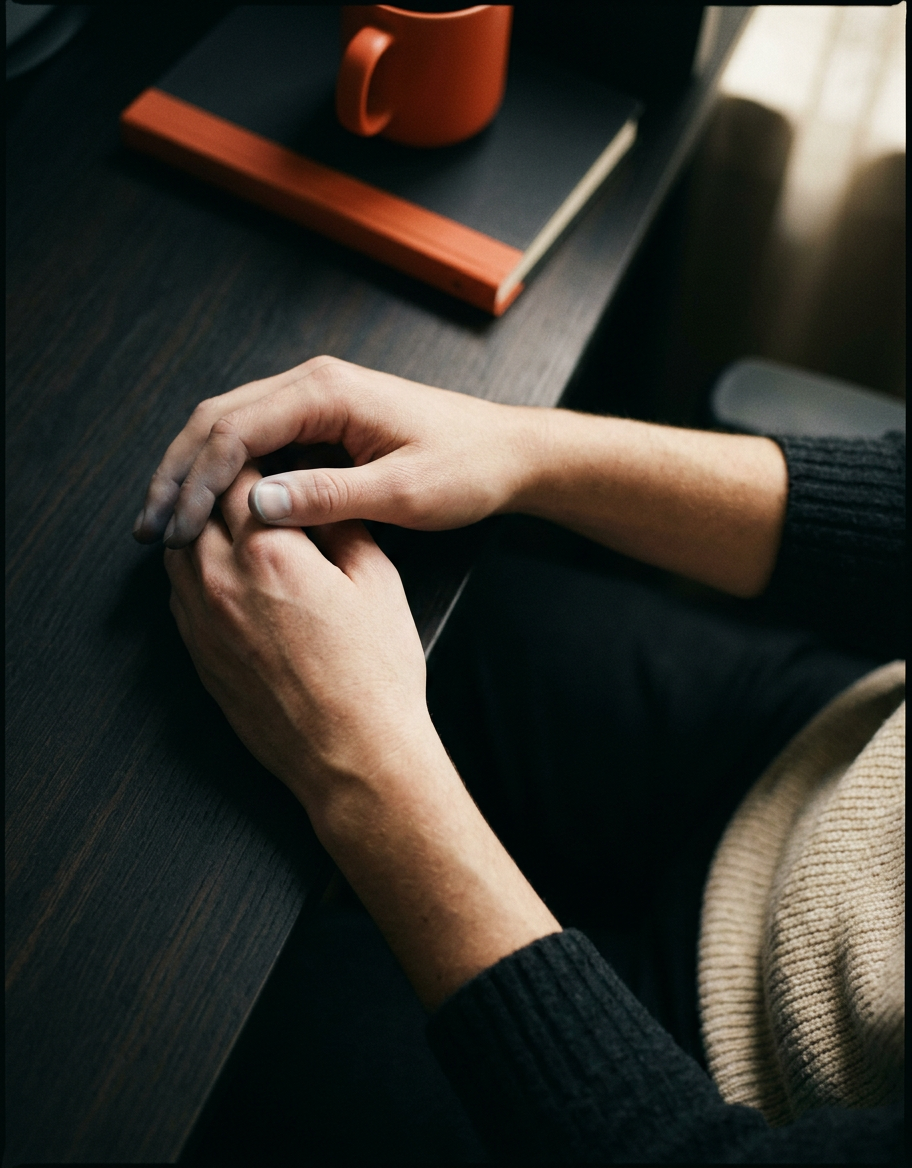
The radiator under the window is humming, the wall thermostat reads twenty-one degrees, and the colleague across the room is working in short sleeves. Yet your right hand, resting on the mouse, feels like chilled marble. By mid-afternoon, typing becomes stiff and clumsy. You tuck your fingers into your armpits between emails or clutch a mug of lukewarm tea simply to restore enough sensation to hit the correct keys.
It is tempting to blame Raynaud's phenomenon, poor thyroid function, or a draft from an unsealed sash window. While vascular conditions do exist, the mundane explanation for most office workers is far less clinical: the human body is an internal combustion engine, and sitting in an office chair effectively cuts the fuel supply to the extremities.
The Engine Drops to Idle
Skeletal muscle accounts for roughly forty percent of adult body mass. In movement, those muscles generate the vast majority of our internal warmth. When you settle into an office chair, the large muscle groups of the legs, glutes, and back become electrically quiescent. Within thirty minutes of continuous stillness, metabolic heat production falls towards basal levels—barely above the rate observed during sleep.
To protect central organs when overall heat generation falls, the autonomic nervous system intervenes. Thermoreceptors register the declining internal heat budget and trigger cutaneous vasoconstriction. Specialised vascular structures in the skin of the fingers and toes, known as arteriovenous anastomoses, constrict tightly. Blood that would normally warm the fingertips is shunted back towards the torso. The room is not cold, but your periphery has been designated an expendable luxury.
Mental Focus Closes the Pipes
Physical stillness is only half of the equation; mental exertion accelerates the chill. Focused cognitive work, tight deadlines, and rapid task switching raise sympathetic nervous system tone. Even in the absence of panic, low-grade occupational vigilance stimulates alpha-adrenergic receptors in the peripheral vasculature.
A desk worker's fingertips do not freeze because the room is hostile; they freeze because the brain is conserving warmth for an engine that is barely idling.
This response mimics the body's reaction to cold exposure or physical threat: peripheral vessels clamp shut to preserve core volume and raise central blood pressure. A spreadsheet does not require muscular fight-or-flight, but the vascular system acts as though it does, draining warmth from the hands while your attention remains locked on the monitor.
Conductive Theft and Postural Pinches
Once internal blood flow dwindles, the physical furniture strips away whatever heat remains. Office design rarely accounts for thermal conductivity:
- Conductive heat loss: Laminated particle board, glass desk tops, and aluminium laptop chassis have high thermal conductivity, drawing heat straight out of the hypothenar eminence and wrists through continuous contact.
- Local mechanical compression: Resting forearms on sharp desk bevels compresses the radial and ulnar arteries, restricting downstream capillary perfusion to the fingers.
- Shoulder girdle elevation: Working on desks that are set too high forces the trapezius and levator scapulae into static contraction, narrowing the thoracic outlet through which the neurovascular bundle travels.
How to Warm the Periphery
Fingerless gloves and heated USB pads treat the symptom while leaving the vascular mechanics untouched. Restoring hand temperature requires generating central heat and removing physical obstructions to arterial flow:
- Fire the calf and thigh pumps: Perform two minutes of bodyweight squats or brisk stair climbing every hour. Activating large skeletal muscle beds produces an immediate spike in core heat that forces peripheral capillary beds to reopen.
- Insulate contact surfaces: Place a wool-felt or thick desk mat beneath your keyboard and mouse to prevent laminate and aluminium surfaces from leaching heat from your skin.
- Lower your working plane: Adjust your desk or chair so your elbows open to ninety degrees or slightly wider. Dropping your shoulders relieves pressure on the thoracic outlet and removes forearm pressure points.
Sources
- Thermal comfort in the workplace (opens in a new tab) — Guidance from the Health and Safety Executive on metabolic rate, air movement, and physical factors in office temperature perception.
General information about work and health, not medical advice. See our medical disclaimer.