A Desk Lamp Is Not a Light Bulb
While often overlooked, the quality and placement of a desk lamp play a significant role in reducing eye strain and supporting cognitive function during extended periods of desk work.
Work Survival Club · 27 October 2026 · 3 min · Original reporting
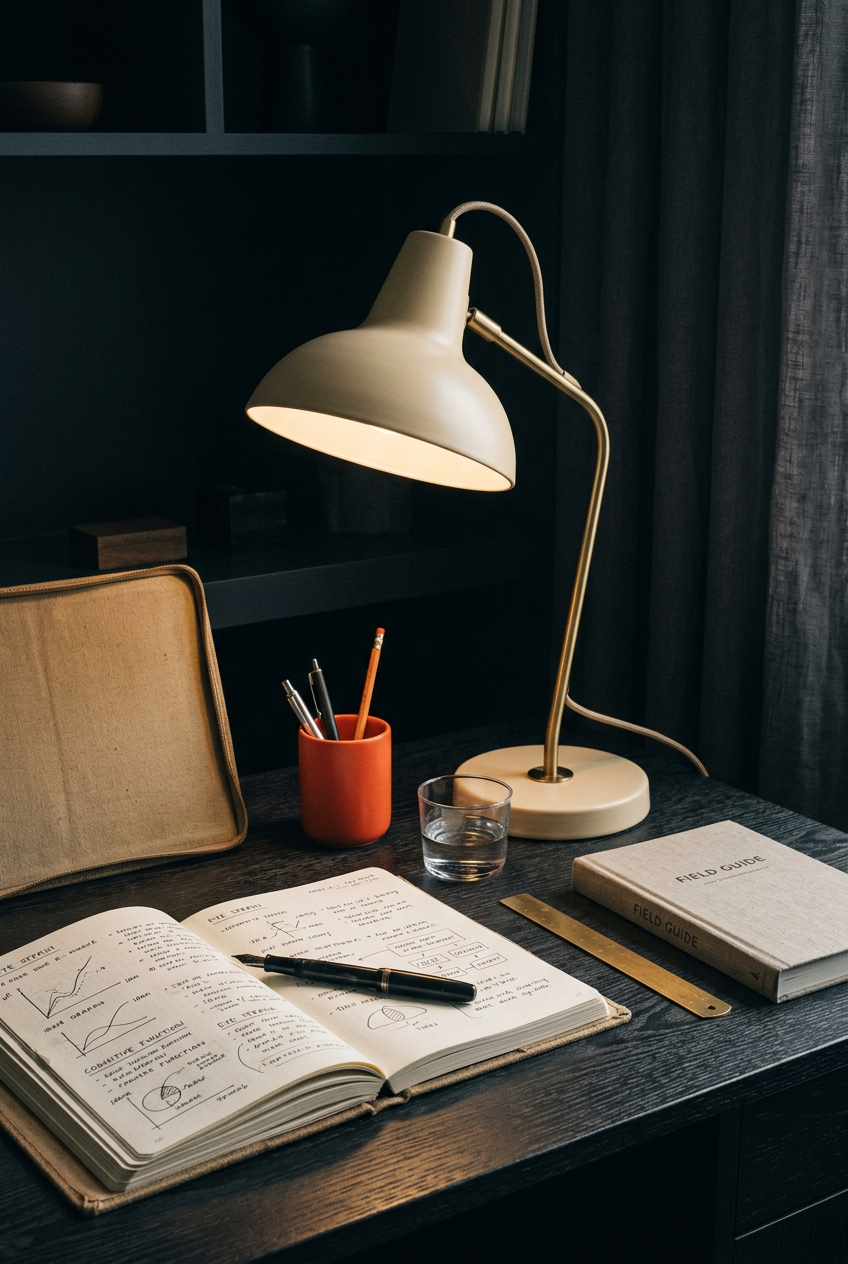
The typical home office often features an array of screens, sometimes augmented by an overhead room light or a general-purpose lamp. This setup, however, frequently neglects the specific requirements of visual tasks performed at a desk. The result can be suboptimal illumination, leading to discomfort and potentially impacting long-term eye health.
Workplace lighting standards, such as those recommended by the Health and Safety Executive (HSE) in the UK, advise specific illuminance levels for different tasks. For desk-based work, including reading and writing, these guidelines often recommend between 300 to 500 lux at the working surface. Relying solely on ambient light or an inadequate lamp can leave many workers operating below these recommended thresholds.
The Cognitive Burden of Poor Light
Insufficient or improperly configured lighting does more than simply make it harder to see. Research indicates that working under poor lighting conditions can increase visual fatigue, which in turn demands greater cognitive effort to process visual information. This increased effort can manifest as reduced concentration, headaches, and even contribute to a sense of general tiredness. A 2011 study published in Ergonomics highlighted that visual fatigue is a significant factor in overall cognitive fatigue among office workers.
Working under poor lighting conditions can increase visual fatigue, which in turn demands greater cognitive effort to process visual information.
Conversely, excessive glare from poorly positioned lights or reflective surfaces can also be detrimental. Direct glare, where a bright light source is visible in the field of view, or indirect glare, caused by reflections from screens or desk surfaces, can lead to discomfort and reduced task performance. Mitigating these issues is a primary function of a well-designed desk lamp.
What to Look For in a Task Lamp
Choosing an effective desk lamp goes beyond aesthetics. The key features relate to adjustability, light quality, and diffusion. These elements collectively contribute to a healthier visual environment.
- Adjustability: Look for lamps with flexible necks or arms that allow precise positioning of the light source. This ensures the light can be directed exactly where needed, reducing shadows and preventing glare on your screen or documents.
- Light Quality: Consider the Colour Rendering Index (CRI), which measures how accurately a light source renders colours compared to natural light. A CRI of 80 or higher is generally recommended for desk work. Also, some lamps offer adjustable colour temperature, allowing users to switch between warmer (2700-3000K) and cooler (5000-6500K) light, which can be useful for different times of day or tasks.
- Diffusion: A good lamp should diffuse its light evenly, preventing harsh spots or shadows. Frosted covers or diffusers are beneficial. Avoid lamps with exposed bulbs that can cause direct glare.
- Brightness Control: Dimmable options allow you to adjust the light intensity to suit ambient conditions and specific task requirements, reducing over-illumination or under-illumination.
- Stability: Ensure the lamp has a stable base or a secure clamping mechanism to prevent accidental knocks or wobbling.
Placement and Integration
Optimal lamp placement is crucial. For right-handed individuals, the lamp is typically positioned on the left side of the workstation, and vice versa for left-handed individuals. This helps to prevent shadows cast by your hand while writing. The light should illuminate your work surface without shining directly into your eyes or creating reflections on your screen. The goal is to provide supplementary illumination for your immediate task, complementing ambient room lighting without creating stark contrasts.
Integrating a task lamp into an existing setup often involves a degree of trial and error to find the most comfortable and effective position. Remember that the brightness settings of your monitor also play a role; aim for a balanced overall luminance in your immediate visual field to reduce eye strain over time.
Investing in a well-chosen desk lamp is not an indulgence but a practical step towards creating a more supportive and less taxing work environment. It is a tool for better visual ergonomics, potentially contributing to sustained focus and reduced workday fatigue.
Sources
- Lighting at work (opens in a new tab) — Health and Safety Executive (HSE) guidance on lighting in the workplace, outlining standards and considerations.
- Effect of correlated colour temperature of office lighting on visual performance and visual comfort (opens in a new tab) — A study in Building and Environment exploring how different colour temperatures of lighting impact worker performance and comfort.
General information about work and health, not medical advice. See our medical disclaimer.