The Headphone Test: Open-Back, Closed-Back, or Noise-Cancelling?
Choosing the right headphones for desk work is more nuanced than simply picking a pair that plays sound, with different designs offering distinct acoustic environments that can influence focus and fatigue.
Work Survival Club · 27 October 2026 · 3 min · Original reporting
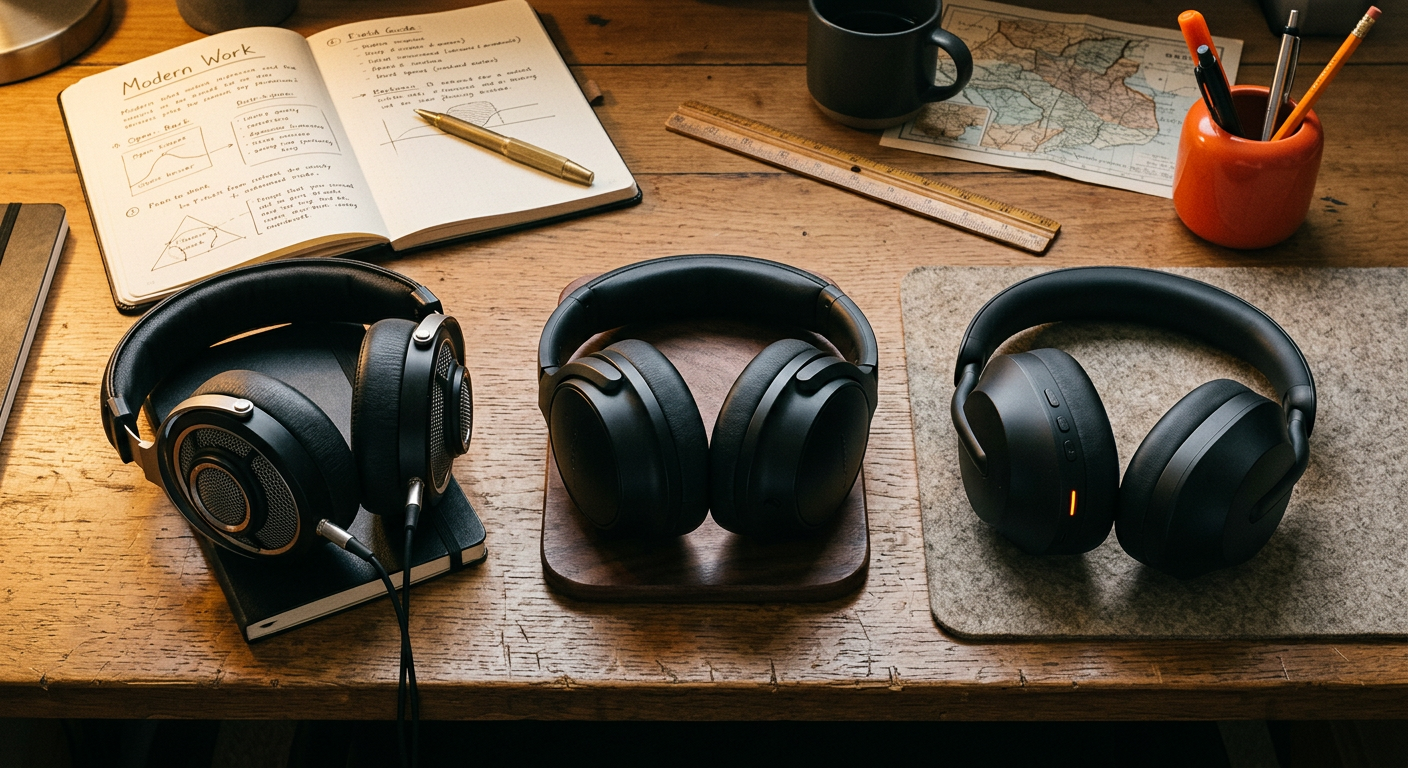
For many desk workers, headphones have become an indispensable tool, a personal sonic bubble against the intrusions of the open-plan office or the distractions of home. Yet, the choice of headphone design is often made on aesthetic or price considerations alone, overlooking the specific acoustic properties that can either support or hinder sustained concentration.
The market offers a range of options, each with a unique approach to sound delivery and external noise management. Understanding these distinctions is crucial for anyone seeking to optimise their auditory environment for productive, less draining work sessions.
Understanding the Fundamentals of Headphone Design
Headphones fall into three primary categories based on their earcup design and noise isolation capabilities: open-back, closed-back, and noise-cancelling. Each type creates a distinct auditory experience, influencing everything from sound quality perception to your awareness of your immediate surroundings.
Open-Back Headphones: The Expansive Soundstage
Open-back headphones feature perforated or mesh earcups, allowing air and sound to pass through freely. This design creates a more natural, spacious soundstage, often described as 'airy' or 'out-of-head', making them popular for critical listening and audio production where accurate sound representation is paramount. However, this openness also means they offer minimal isolation from ambient noise and leak sound quite audibly.
The choice of headphone design is often made on aesthetic or price considerations alone, overlooking the specific acoustic properties that can either support or hinder sustained concentration.
Closed-Back Headphones: The Personal Sound Chamber
Conversely, closed-back headphones encase the ear completely with solid earcups, creating a seal that passively blocks external noise and prevents sound leakage. This design provides superior isolation, making them suitable for noisy environments or situations where privacy is important. The trade-off can be a less natural, sometimes 'boxy' soundstage, and some users may find the enclosed feeling contributes to ear fatigue over long periods.
Noise-Cancelling Headphones: Active Acoustic Management
Active noise-cancelling (ANC) headphones take isolation a step further. They incorporate microphones that listen to ambient sound and then generate an inverse sound wave to cancel it out, a process known as destructive interference. This is particularly effective against low-frequency, constant noises like engine hums or air conditioning. While excellent for reducing specific types of noise, ANC technology can introduce a subtle 'pressure' sensation for some users and is less effective against sudden or high-pitched sounds like speech.
Matching Headphones to Your Work Environment
The optimal headphone choice depends heavily on your specific work environment and personal preferences for auditory stimulation or isolation.
- For quiet, private spaces: Open-back headphones can be an excellent choice if your primary concern is sound quality and a natural listening experience, and you do not need to block out noise or worry about sound leakage. They generally offer less ear fatigue due to better airflow.
- For moderately noisy environments or privacy: Closed-back headphones provide a good balance of sound isolation and fidelity, making them suitable for shared offices where you need to block out some chatter but not be completely cut off. They prevent others from hearing your audio.
- For consistently loud, low-frequency environments: Active noise-cancelling headphones excel in spaces with constant background hums, such as busy commuter routes or offices with loud HVAC systems. However, their effectiveness against sporadic conversations or sudden noises is limited.
It is worth noting that excessive noise exposure, even at moderate levels, can lead to increased stress and reduced cognitive performance, as evidenced by research on office noise environments [1]. While headphones can mitigate some of these effects, they are a personal solution and do not address systemic issues of workplace acoustics.
Considering Long-Term Use and Health
Beyond immediate comfort, the long-term implications of headphone use warrant consideration. High volumes can cause hearing damage [2]. Maintaining awareness of your listening levels is paramount, regardless of headphone type. Furthermore, the physical design can impact comfort, with factors such as clamping force, earpad material, and weight contributing to potential discomfort or heat build-up over extended periods.
Ultimately, the 'best' headphone for desk work is the one that allows you to maintain focus and comfort throughout your workday without compromising your hearing health or situational awareness more than necessary. Experimenting with different types, where possible, can help identify the optimal fit for your individual needs and environment.
Sources
- The impact of noise on cognitive performance, stress and well-being in open-plan offices: A systematic review (opens in a new tab) — This systematic review examines the effects of office noise on workers.
- Occupational noise exposure (opens in a new tab) — Health and Safety Executive (UK) guidance on noise at work.
General information about work and health, not medical advice. See our medical disclaimer.